
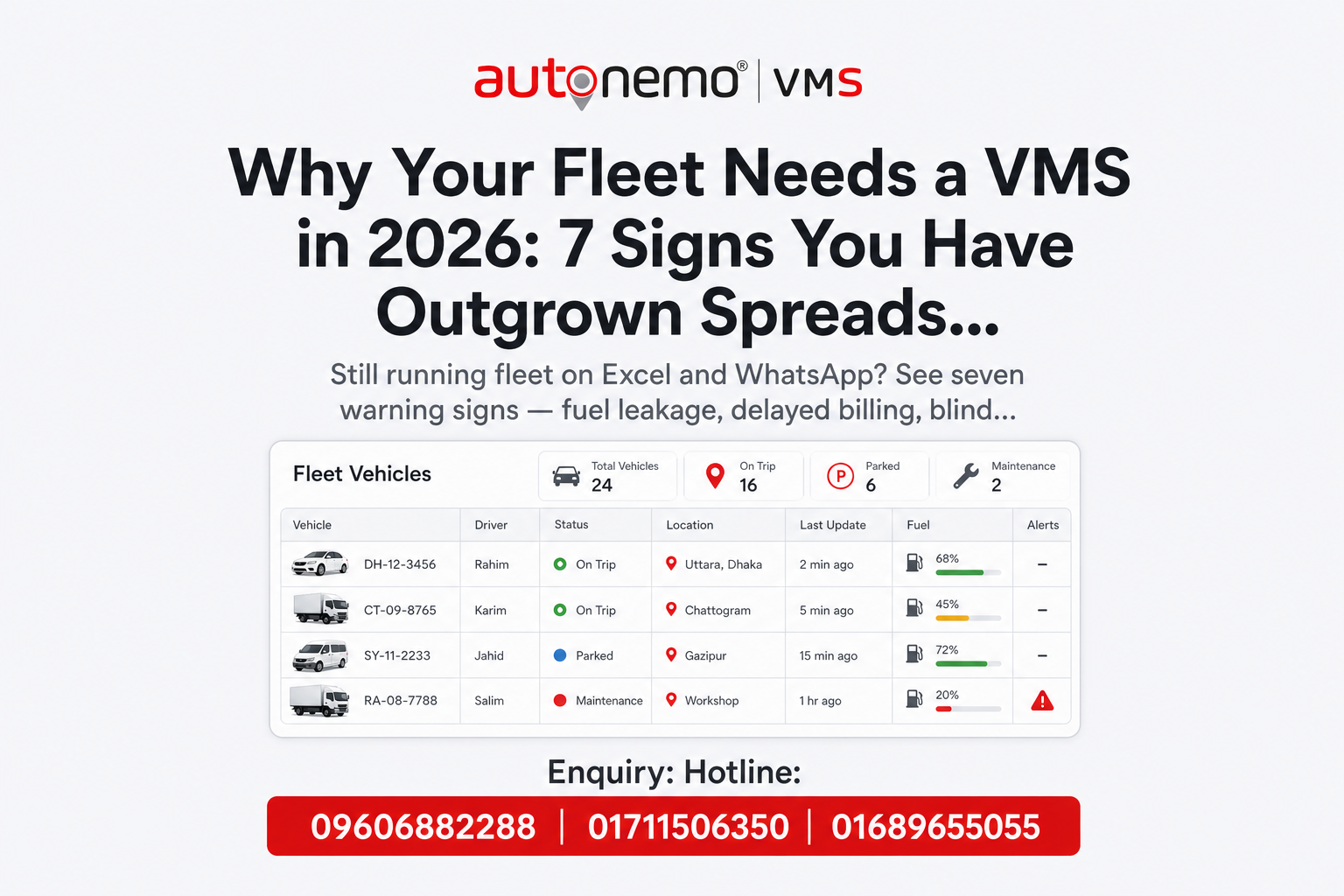
If your team spends hours reconciling fuel slips, chasing drivers on phone, or rebuilding trip reports in Excel, you do not have a software problem — you have a control gap. Here are seven signs it is time for a connected VMS.
1. Fuel cost rises without clear explanation
Mileage varies by route and load, but nobody can prove variance before month-end. Fuel modules tie entries to trips and vehicles so leakage surfaces early.
2. GPS exists but operations still run on calls
Tracking dots without trip context creates arguments, not accountability. Link live GPS to dispatch, playback, and trip desk workflows.
3. Billing waits on manual trip sheets
Commercial transport lives on fast invoicing. When trip data lives in notebooks, cash flow suffers and disputes grow.
4. Compliance documents expire quietly
Fitness, insurance, and route permits need alerts — not folder searches the day before an audit.
5. Multi-branch teams use different formats
Depot A and Depot B reporting differently means headquarters never sees one truth. Branch-wise roles and dashboards fix that.
6. HR and fleet data never match
Drivers on payroll but not on trips (or the reverse) signals weak governance. Connect HR, attendance, and trip assignment.
7. Management asks questions data cannot answer
“Which route loses money?” “Which vehicle under-utilizes?” Without integrated reporting, answers are guesses.
The solution direction
Autonemo VMS Pro is built for private companies and commercial institutions that need accountable fleet control — not generic SaaS filler. Request a demo to map your current pain points to modules.