
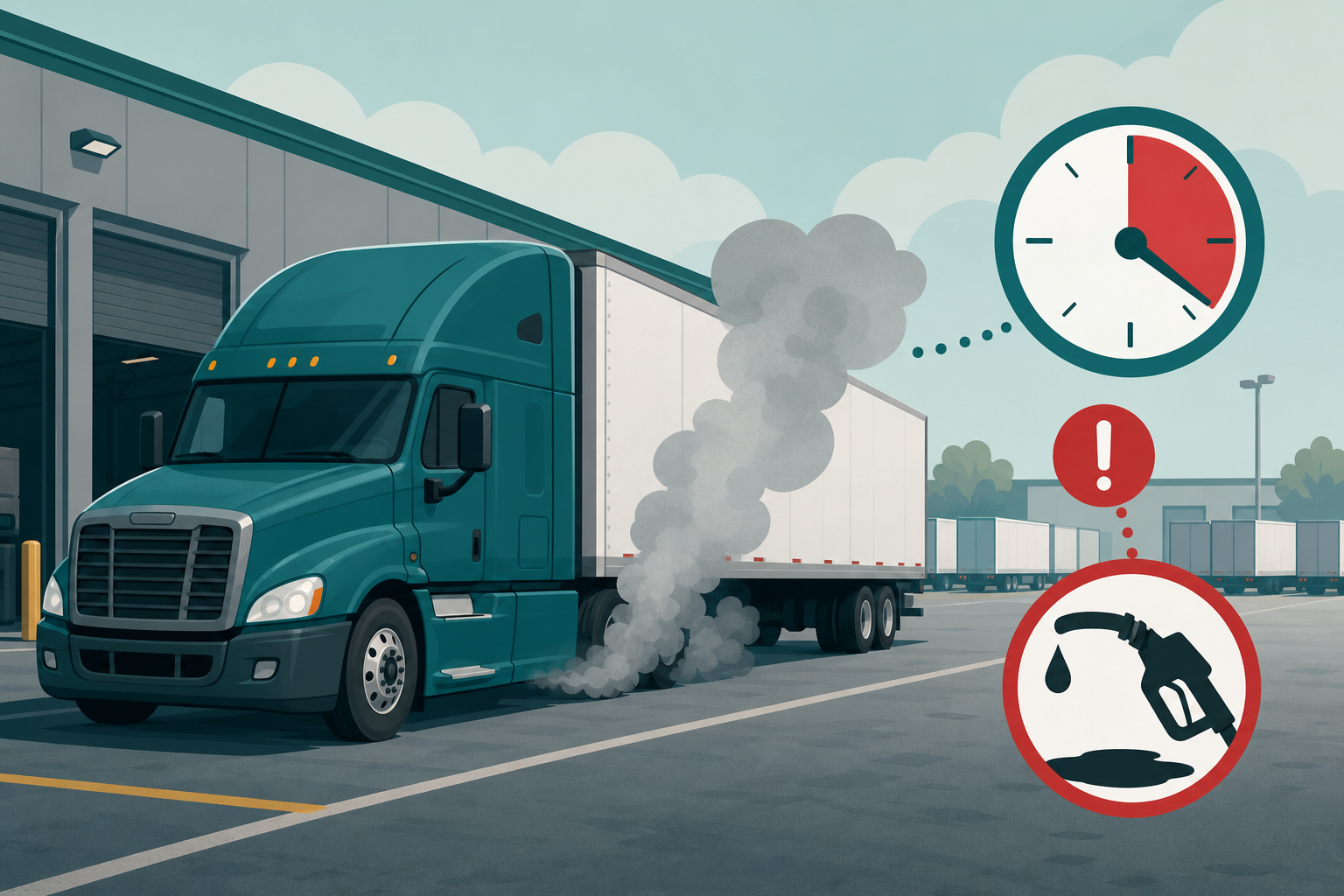
Five minutes of idle feels harmless until multiplied across twenty vehicles, two shifts, and two hundred working days. Engine-on without movement burns diesel, adds maintenance wear, and often signals depot or client process failure rather than driver indifference. Bangladesh fleets fighting fuel price volatility cannot ignore idle — it is among the fastest savings available without capital spend.
Idle reduction is not a campaign to switch off air conditioning in 40°C queues without policy nuance. Allowed idle contexts — loading, regulated client yard wait, traffic gridlock with safety constraint — differ from preventable waiting at dispatch bottleneck or unstructured breaks. Measurement makes the distinction actionable.
GPS idle events, coaching, and depot process fixes together deliver sustained reduction. Punishment-only approaches without fixing queue causes rebound within weeks.
Summer heat in Bangladesh influences idle behaviour — drivers leave engines running for cabin cooling during legitimate waits. Policy should distinguish cooling allowance at client-mandated engine-on yards from depot-side waiting where shade, rotation, or staggered dispatch reduces need. Refrigerated units may require engine or reefer unit running independent of cab comfort — classify reefer idle separately from cab idle in reports to avoid false coaching targets.
Publish monthly idle trend to all drivers with depot comparison — transparency reduces suspicion that only certain drivers are targeted. Celebrate depot that improves most quarter-over-quarter.
Define allowed idle contexts in writing
Publish rules drivers and clients can follow: maximum unstructured wait before shutdown request, exceptions for temperature-sensitive cargo cabin prep, and client sites where engine-off is prohibited. Ambiguous policy produces either excessive idle or unsafe shutdown in wrong places.
Share policy in driver onboarding and quarterly refresh — not once on a poster nobody reads.
- Loading and unloading at depot: engine policy stated
- Client yard: confirm with account manager and post at trip brief
- Traffic stop beyond X minutes: shutdown when safe and policy allows
Measure idle minutes per trip and depot
GPS idle reports turn policy into facts. Review weekly by depot, route class, and shift — share team averages in briefing. Individual review in coaching session, not public channel. Depots with morning idle spikes often have assignment delays, not lazy drivers.
Fix dispatch and gate bottlenecks
Often idle is operations delay: late trip sheet, missing compliance check, fuel cash not ready, security gate queue. Map idle timestamps to process steps — fix the step, idle falls. Morning briefing readiness block directly attacks depot idle before first departure.
Coach shutdown at long unstructured stops
Forty-five-minute waits without loading activity or client mandate should trigger shutdown habit where safe. Cabin comfort trade-offs acknowledged — policy can allow periodic restart without full idle marathon. Helpers and second drivers need same training; idle culture is team norm.
Link idle trends to maintenance signals
Some vehicles idle longer because drivers avoid gear, clutch, or cooling issues — garage should see idle pattern alongside complaint log. Preventive fix reduces both fuel waste and roadside breakdown risk on long-haul night legs.
Set targets and review monthly trend
Baseline one month before target. Reduce depot idle ten to fifteen percent through process first; driver coaching second. Celebrate branch improvement — competitive improvement between branches works when data is trusted.
Idle reduction as cross-functional project
Form small idle task force: dispatch, gate security, fuel incharge, one senior driver representative. Map top three idle hours from GPS; walk the yard at that hour once — physical observation beats spreadsheet debate. Fix gate process, assignment timing, or client wait policy before second coaching round.
Report idle minutes per 100 km alongside fuel per 100 km in monthly leadership pack — normalises comparison across branches of different size.
Install visible idle timer experiment on one depot queue lane — drivers and dispatch see cumulative minutes during morning peak; visual counter often changes behaviour faster than monthly report. Expand if pilot reduces ten percent idle in two weeks.
Include idle reduction target in depot manager annual objective with modest incentive — aligns leadership attention beyond fuel incharge alone.
Common mistakes to avoid
Announcing idle cuts without defining allowed contexts breeds resentment and unsafe workarounds. Using idle ranking as sole performance metric ignores route impossibility. Another mistake is measuring idle but never staffing dispatch fixes — data without process change frustrates everyone.
Do not disconnect GPS when idle scrutiny rises — tampering destroys all metrics. Avoid client-blame without verification; many idle minutes start at depot gate.
Client sites with chronic wait should appear on commercial agenda — idle cost shared with account manager supports renegotiation of window or dock staffing. Internal idle policy alone cannot fix client-side delay pattern.
Quick action checklist
- Publish idle policy with allowed contexts and limits
- Baseline idle minutes per depot from GPS last 30 days
- Map top idle depot hour to dispatch or gate process step
- Fix morning assignment delay before driver coaching campaign
- Review vehicles with idle plus maintenance complaints together
- Share weekly team idle average in supervisor briefing
- Target ten percent depot idle reduction month one through process
Compare idle before and after gate process change with two-week A/B at one depot — evidence of improvement builds org support to replicate change at other branches.
Depot signage reminding shutdown during waits longer than policy limit — visual cue supports coaching message without supervisor present at every queue.
Track idle reduction in monthly transport report headline metric alongside fuel per km.
See idle-related fuel savings in our case studies. Explore fuel and GPS idle modules in a demo or via logistics fleet solutions.