
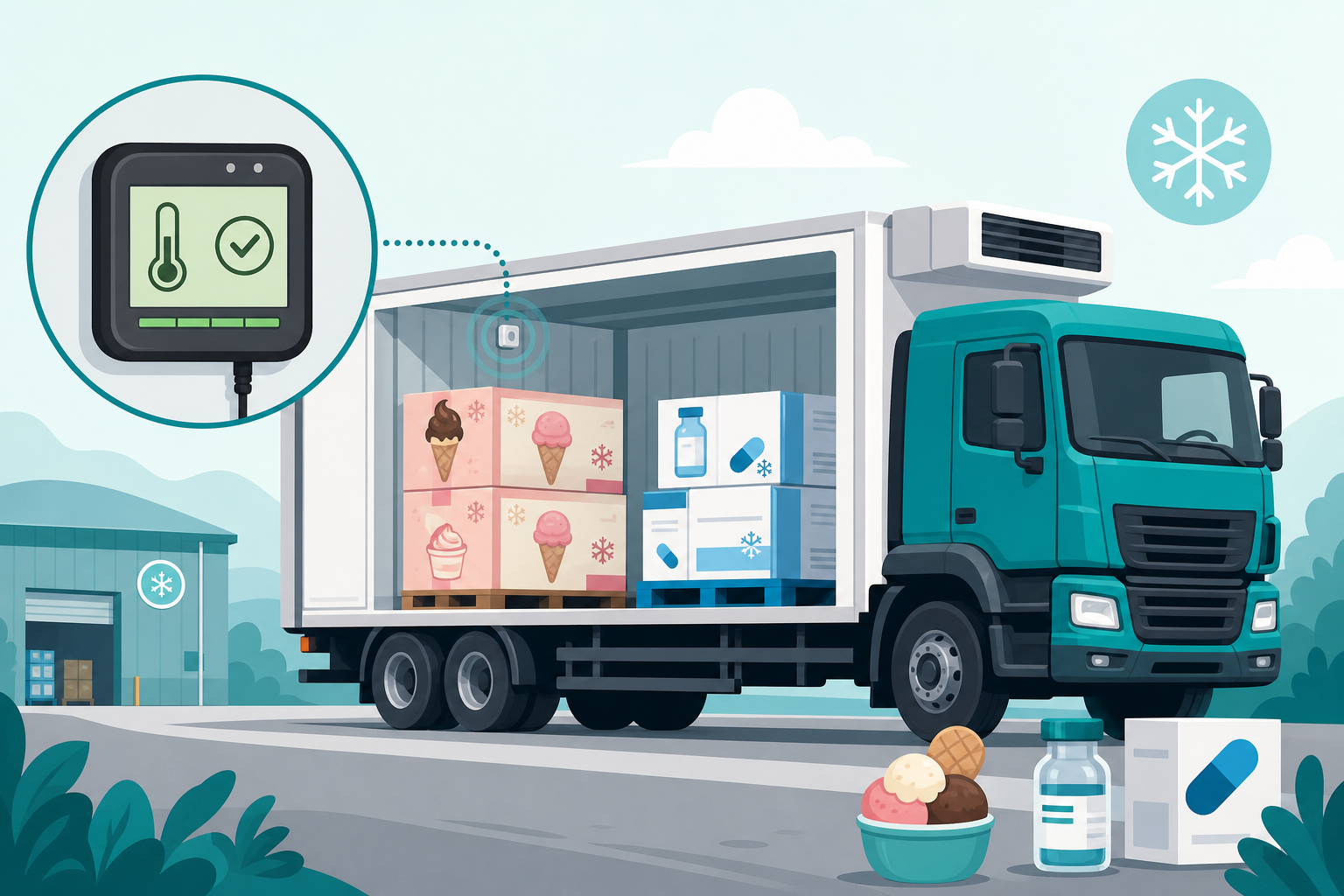
Ice cream and pharmaceutical distribution share an unforgiving rule: temperature history must be provable, not assumed. A single warm interval in a reefer van can void an entire pharma load or turn ice cream into write-off — and retail partners in Bangladesh increasingly demand trip-level logs before accepting delivery. Cold-chain failure destroys product and trust faster than late arrival alone.
Many operators treat reefer fleet like dry cargo with a cooling unit attached — manual temperature checks at stops, door opens for reading, inconsistent set-point discipline. Each door open warms cargo; each unlogged gap invites dispute when client QA rejects stock.
Basics below apply whether you run five reefer units or fifty: continuous monitoring, breach alerts, door correlation, trip logs for clients, and geofenced stop proof. Advanced telematics helps; discipline determines whether data survives audit.
Power backup at depot for pre-cool and loading bay matters in load-shedding hours — reefer unit healthy on road cannot compensate for warm loading because yard compressor failed during outage. Maintain generator or alternate bay schedule for pharma loads during known outage windows. Driver training must cover set-point verification before departure — wrong setting on -20°C ice cream lane running at -10°C destroys product gradually without obvious alarm if band is too wide.
Retail partners increasingly reject load without downloadable trip log — build export template before client asks, not during first rejection at dock.
Continuous sensor feed beats manual spot checks
Opening doors for thermometer reading warms product and skips intervals between checks. Live sensors with min/max band per cargo class catch drift early — compressor struggling, set-point wrong, or pre-trip pre-cool skipped. Sensor calibration schedule documented; expired calibration fails client audit even if cargo arrived fine.
- Sensor placement per vehicle type validated once and diagrammed
- Set-point and band defined per product category in trip brief
- Pre-trip pre-cool logged before departure release
Alert on breach duration and recovery, not peak alone
How long above threshold matters as much as peak temperature — brief spike during defrost differs from sustained breach during traffic idle. Log breach start, peak, recovery time, and driver acknowledgment. Repeated brief breaches on same vehicle triggers maintenance, not only driver note.
Correlate door-open events with authorised stops
Unplanned door opens at non-delivery GPS locations are investigation signals — especially multi-drop urban loops with informal stops. Door sensor plus location answers “was this a delivery or unauthorised access?” faster than driver interview alone.
Trip temperature log export for client QA
Proactive PDF or portal export per trip reduces disputes at receiving dock. Pharma clients often require batch-linked cold chain record — trip ID, vehicle, driver, sensor trace, door events. Ice cream retail chains apply similar scrutiny during summer peak.
Geofenced stop proof and loading discipline
Match temperature segments to authorised delivery geofences — not only timestamps. Loading sequence and pallet stability affect airflow; warehouse loading SOP part of cold chain, not only transport. Broken seal or reefer unit alarm at load must block departure until cleared.
Maintenance and standby capacity for reefer fleet
Reefer breakdown mid-trip is total loss scenario — preventive maintenance on cooling unit higher priority than dry fleet. Standby reefer or transfer plan for long inter-district legs reduces exposure. Night shift reefer monitoring because temperature breach at 2 AM still voids load at 6 AM delivery.
Client QA readiness for cold chain
Before pharma or ice cream account audit, run internal mock audit: random three trips, export temperature log, verify door correlation, confirm driver signed pre-trip check. Fix gaps before client finds them — mock audit quarterly for top two cold chain accounts.
Train backup driver on reefer set-point and alarm response — primary driver absence should not force dry-fleet substitute without qualified operator.
Cross-train two drivers per reefer unit on alarm response — single-operator dependency fails on leave day during heat peak. Training log attached to vehicle master proves client audit readiness.
Backup reefer agreement with partner operator for catastrophic unit failure — contractual one-call swap prevents total load loss on long pharma lane.
Common mistakes to avoid
Treating GPS as sufficient without temperature channel — location correct, cargo warm. Relying on driver handwritten log without sensor correlation — disputes favour client. Another mistake is same set-point for ice cream and +2°C pharma — product classes need distinct bands.
Do not disable alerts to reduce noise — tune thresholds instead. Avoid loading warm product expecting reefer to recover on road — pre-cool discipline non-negotiable.
Seasonal ambient temperature swing affects reefer load — summer may need lower set-point pre-cool and tighter door discipline; update SOP before heat peak, not after client rejection batch.
Quick action checklist
- Live temperature feed active on all reefer units in service
- Breach alert includes duration and recovery logging
- Door events correlated to GPS stop list daily
- Client export template tested with QA on major accounts
- Pre-trip pre-cool check blocks departure if failed
- Reefer PM schedule stricter than dry fleet equivalent
- Night shift monitoring path defined for long-haul reefer
Include cold chain brief in every reefer trip assignment screen — set-point, product class, max door-open count — dispatcher cannot assign without seeing parameters reduces wrong-unit dispatch.
Quarterly reefer fleet thermo efficiency check — units consuming excess diesel for cooling may indicate refrigerant issue raising both fuel and breach risk.
See temperature monitoring and trip proof in Autonemo solutions, cold-chain fleet patterns on logistics transport, or request a demo for sensor and alert configuration.