
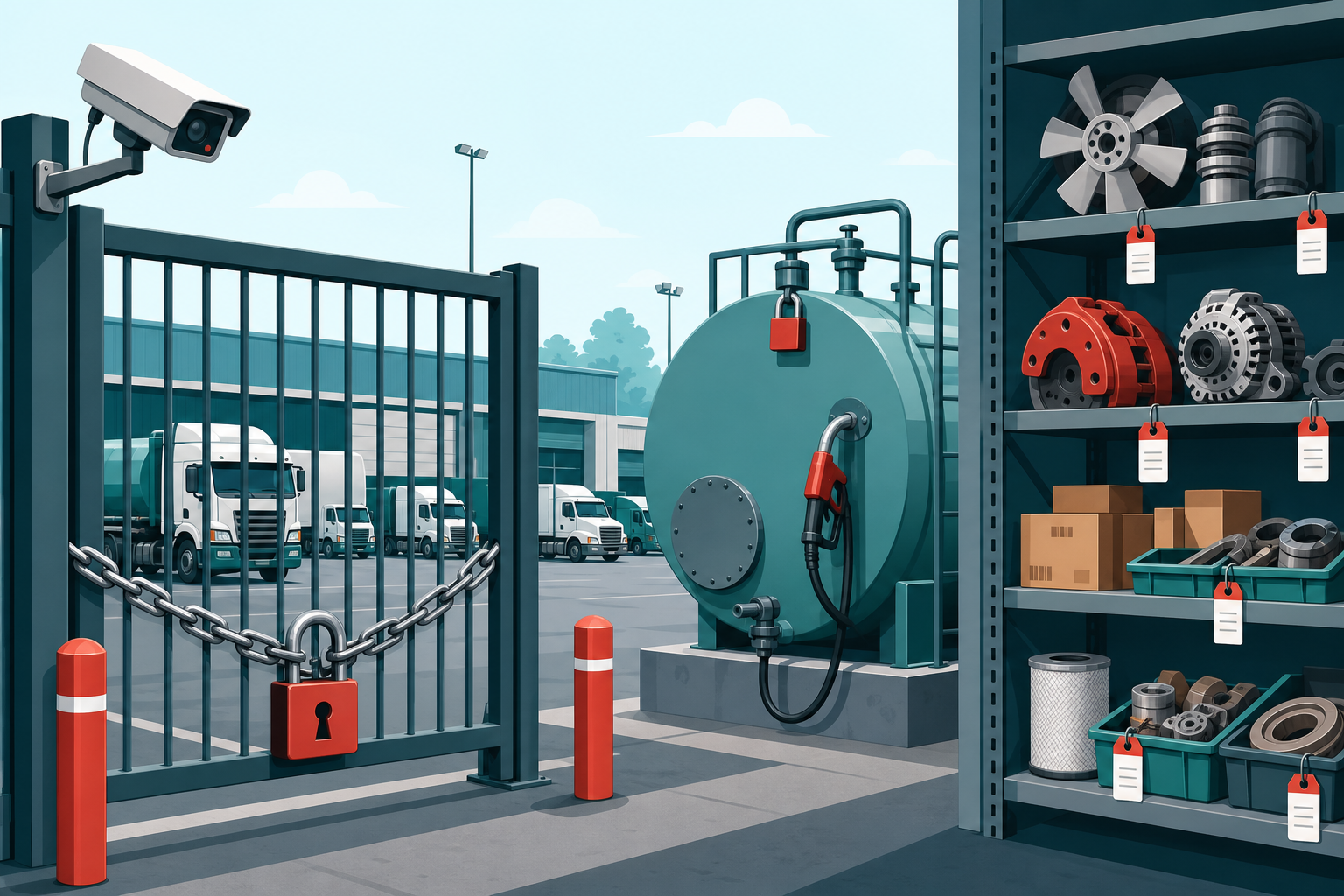
Parts and fuel theft in transport depots rarely involves dramatic heists. More often, litres and spare items drift through weak controls — a hose issued without job card, pump readings that never reconcile, store withdrawals signed by the same person who requested them. Bangladesh fleets running tight margins feel these losses as unexplained fuel variance and maintenance cost inflation long before anyone names theft.
Theft thrives where inventory, pump stock, trip records, and CCTV timestamps live in disconnected places with no daily reconciliation. Small depots assume trust replaces process until a major audit or vendor dispute forces uncomfortable questions. Prevention is structural: separate duties, log every movement, reconcile daily, and correlate physical events with system entries.
Security culture matters, but culture without controls fails at scale. The practices below work for ten-truck depots and multi-branch operators alike — scaled by approval thresholds, not by skipping steps.
Bangladesh depot layouts often combine workshop, store, pump, and gate in one compact yard — physical separation is limited, so procedural separation matters more. Rotate weekly review duty among supervisors so no single person normalises shortcuts. Report aggregate variance trends to leadership monthly without naming individuals until investigation completes — transparency on process, discretion on personnel until facts firm.
New pump operators and store assistants need structured onboarding on issue logging — most theft patterns begin as “temporary shortcut” during busy week that becomes normal. Sign reconciliation sheet at shift change; two signatures beat one.
Log every parts issue to vehicle or job card
Anonymous withdrawals from store are the easiest leak. Each issue ties to workshop job card, vehicle registration, or approved requisition number — no exceptions for “urgent field fix.” Storekeeper posts issue; mechanic acknowledges fitment; supervisor reviews high-value items weekly.
Standardise minimum stock levels and reorder triggers so emergency unofficial purchases decrease — most off-books parts purchases begin as legitimate urgency without process.
- Block store issue without vehicle or job reference in system
- Review top ten value issues weekly for pattern
- Cycle-count fast-moving items monthly
Reconcile fuel pump readings daily
Opening stock plus purchases minus documented issues should equal closing stock within defined variance band. Same-day investigation catches transcription errors and early pattern abuse; same-month investigation becomes blame exercise.
Separate pump operator from approver and from trip assignment — one person controlling all three invites collusion. Small teams rotate weekly review duty if headcount prevents full separation.
Match fuel entries to trip and vehicle same day
Litres logged without trip context hide misuse on vendor lanes and overnight holds. Pair every issue to vehicle, driver, odometer, and active trip where applicable. Finance releases no fuel cash advance without expected return entry deadline.
Compare pump issues to vehicle fuel entries — systematic gap on one shift or one operator warrants immediate review.
Use CCTV as correlation tool, not theatre
Cameras help when timestamps align with system entries — pump issue at 14:03 should appear in log at 14:05, not next morning. Random weekly correlation of three flagged events trains staff that records matter.
Coverage gaps at store door and pump island are higher priority than office corridors — theft concentrates where material moves.
Vendor and hired vehicle fuel rules explicit
Vendor drivers fueling on owner account without trip link duplicate leakage paths. Contract should state who logs, who pays, how km is verified, and penalty for missing entry. Same rules as owned fleet — parallel honour system fails.
Settlement statements include fuel line reconciliation before payment release.
Audit and surprise checks without destroying morale
Scheduled monthly stock audit plus occasional unannounced pump dip reading sends signal without daily suspicion. Communicate policy: controls protect honest staff from false accusation as much as they catch abuse.
Investigate patterns, not one-off variances within measurement error — over-reaction erodes cooperation.
Leadership visibility without witch hunts
Transport manager reviews aggregate variance trend monthly with store and pump leads present — focus on process gap, not individual accusation in group setting. Celebrate months within variance band after prior improvement — positive reinforcement sustains daily reconciliation habit. Escalate to HR only when investigation completes with evidence, not on suspicion from single anomaly.
Include theft prevention KPIs in depot manager scorecard: daily reconciliation completion rate, cycle count timeliness, uncoded parts issue count — what gets measured gets done.
Common mistakes to avoid
Trust-based store with single keyholder works until volume grows — then it fails expensively. Teams install CCTV but never watch correlated footage until loss is large. Another mistake is reconciling fuel monthly while ops makes daily decisions — variance is operational data, not accounting trivia.
Do not exempt senior drivers or long-tenured staff from issue logging — exceptions become norms others copy. Avoid public accusations without evidence; recover loss and fix process, use disciplinary path only when proof supports.
Board-level review of fuel and parts variance quarterly — even small stable variance within band should be reported so leadership knows controls operate. Sudden improvement without process change may indicate reporting fraud, not actual fix.
Quick action checklist
- Enforce job card or vehicle reference on every parts issue
- Reconcile pump stock daily with documented variance threshold
- Separate request, issue, and approve roles where headcount allows
- Pair fuel litres to trip, vehicle, and odometer same day
- Correlate three random CCTV events with system logs weekly
- Include vendor fuel in identical reconciliation rules
- Schedule monthly cycle count on fast-moving store items
Read how operators uncovered fuel and inventory loss in our case studies. Explore fuel, inventory, and audit modules via demo request or the logistics transport solutions overview.